Tamagotchi Prototype
Tools/Skills Used
- UXUI Design
- Prototyping
- Animation
- 3D Modeling
- Interactive Design
- Figma
- Cinema4D
- After Effects
Time
2 months
Goal of Project
The goal for this project was to use Figma and a 3D Modeling Software of our choice to Create a fully functional tamagotchi game, featuring consistent UI, onboarding, sound design, and synchronised animated sequences.
Project Type
School Assignment
Ideation
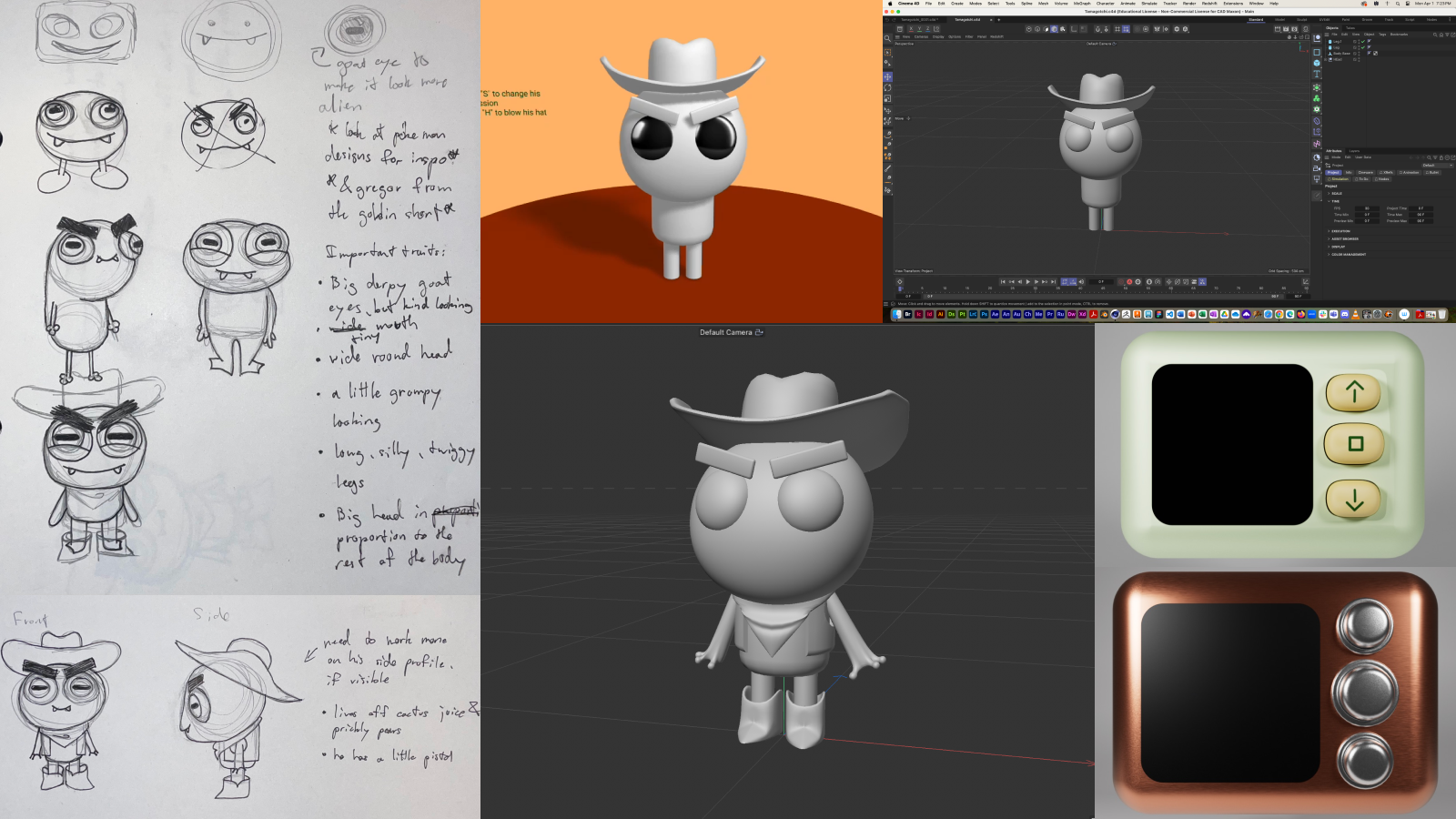
When it came to designing the tamagotchi character and case, I wasn’t trying to make a stereotypical alien or anything frog-like, I was aiming to find a design that invoked a certain reaction out of its audience (something so angry-looking but so cute it couldn’t be taken seriously and any strong emotions shown by it were merely endearing). I tried to apply the same idea when designing different cases and exploring different ways to design the UI, which was to have functionality at the forefront but without straying too far from the theme, which had inevitably become “western while still looking technologically modern”, taking a lot of inspiration from sci-fi, western, and steampunk designs.
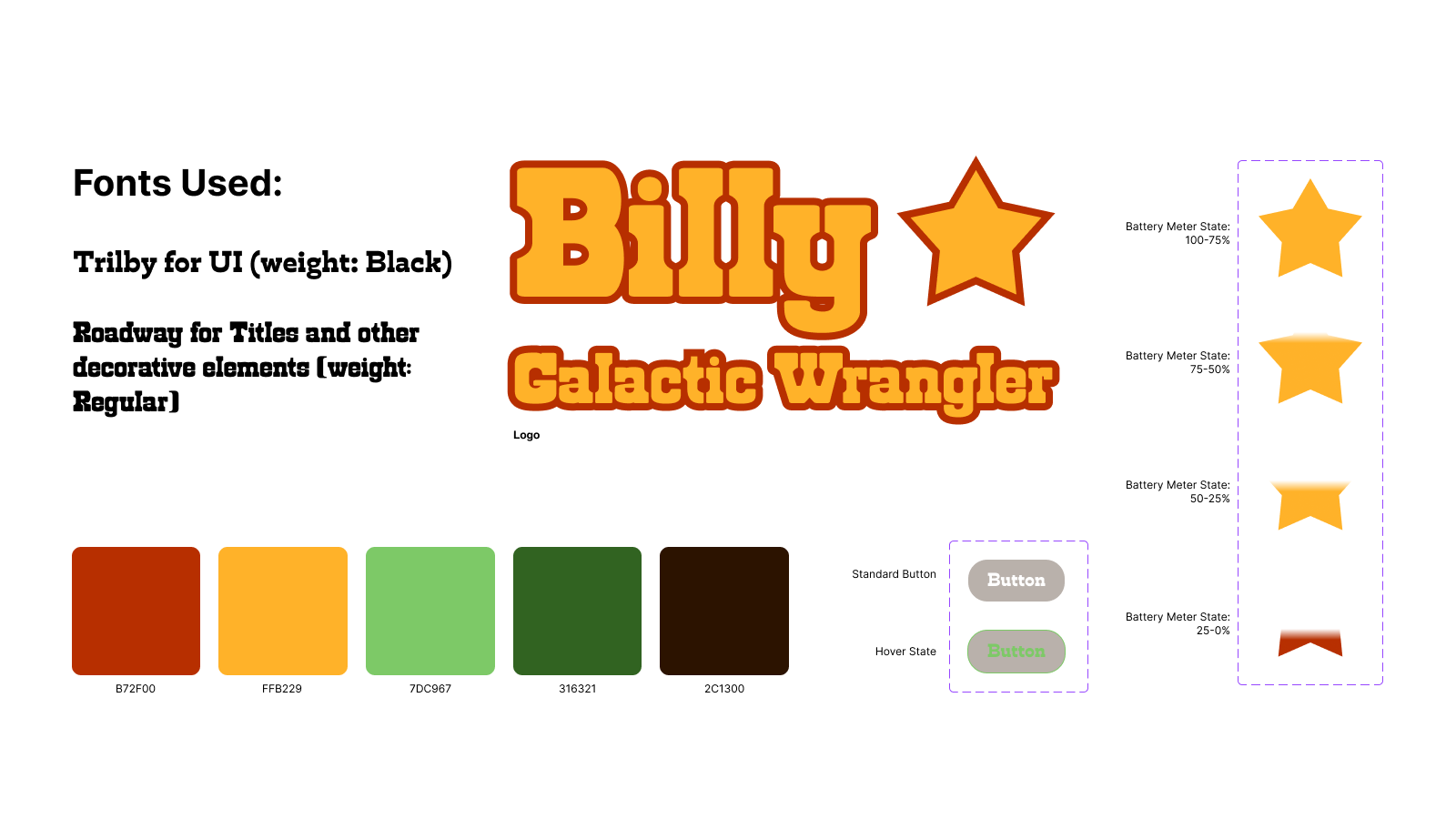
Device and Character
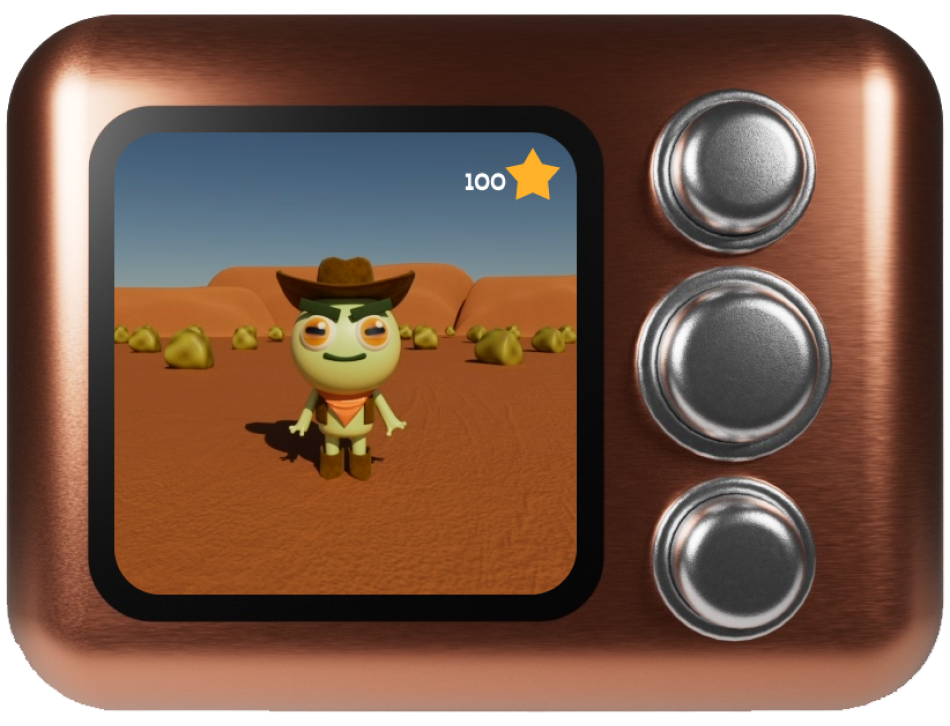
Dimensions: 4 x 3in
Screen: 400 x 400pi
Inspiration: Sci-fi Western fusion
Character: Mħæůřbp, most commonly know as Billy, is a frog-like alien stranded on Mars with a hyper-obsession with cowboys and the Wild West.
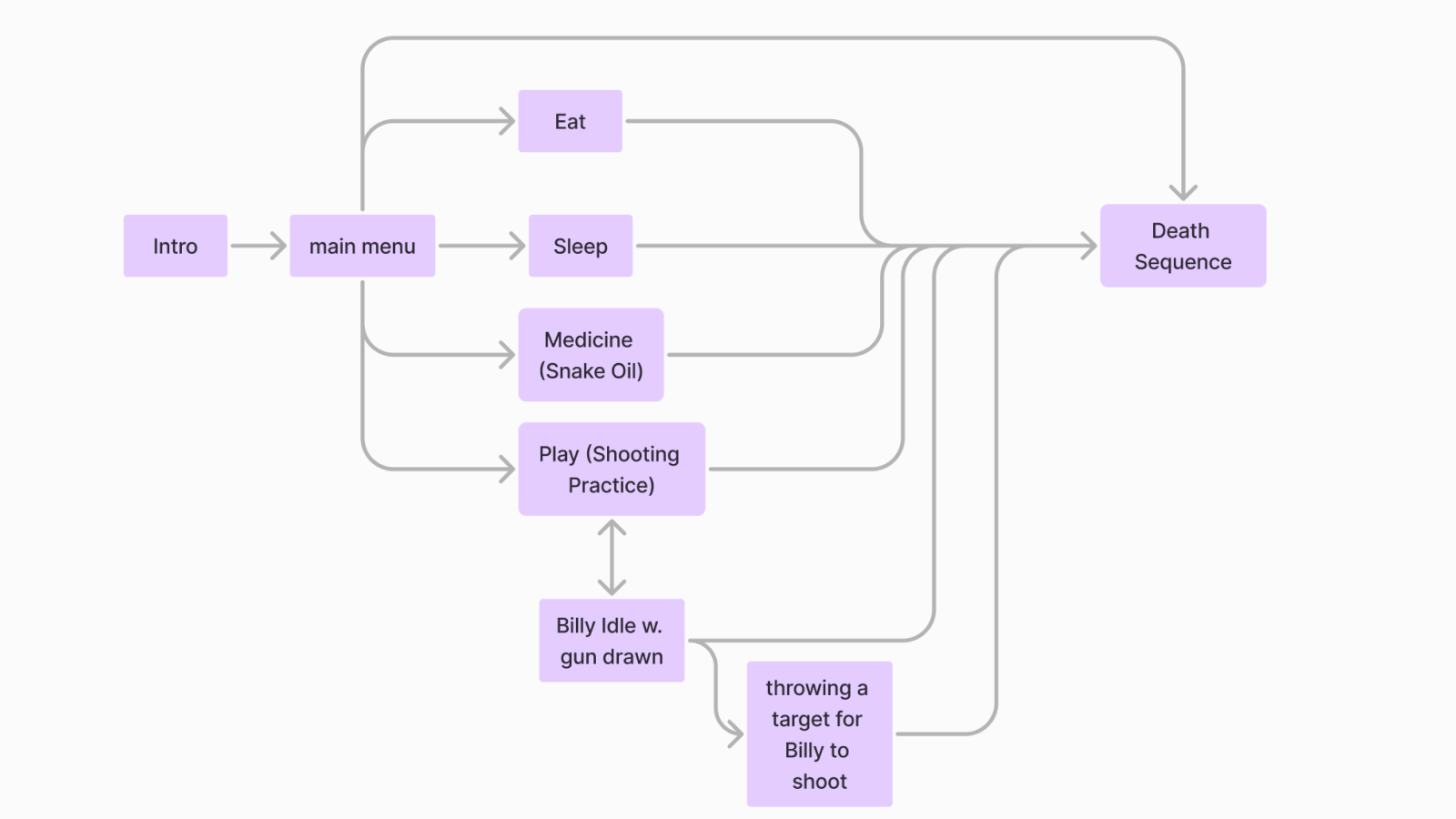
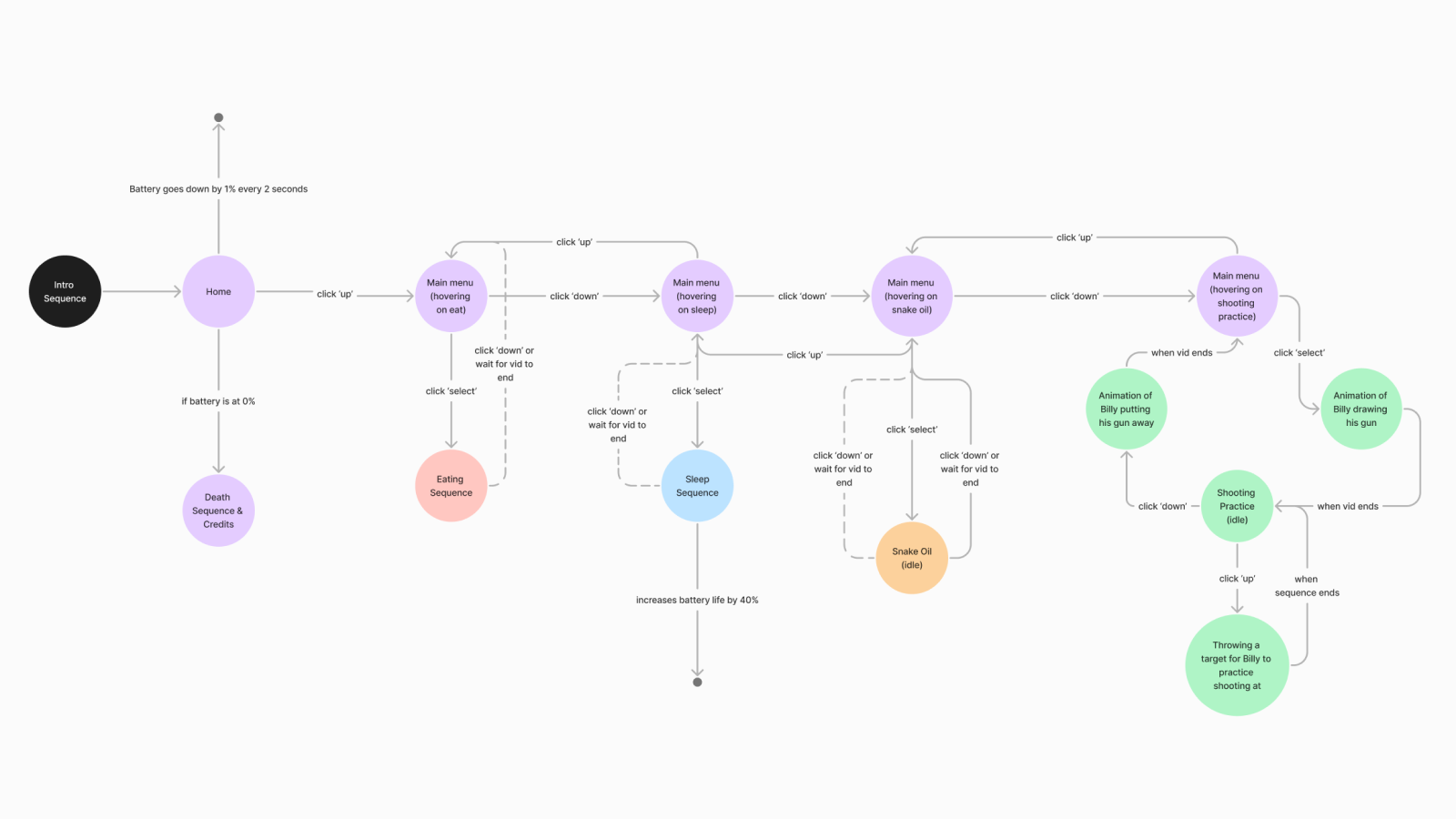
Sitemap and Userflow
Main Screens
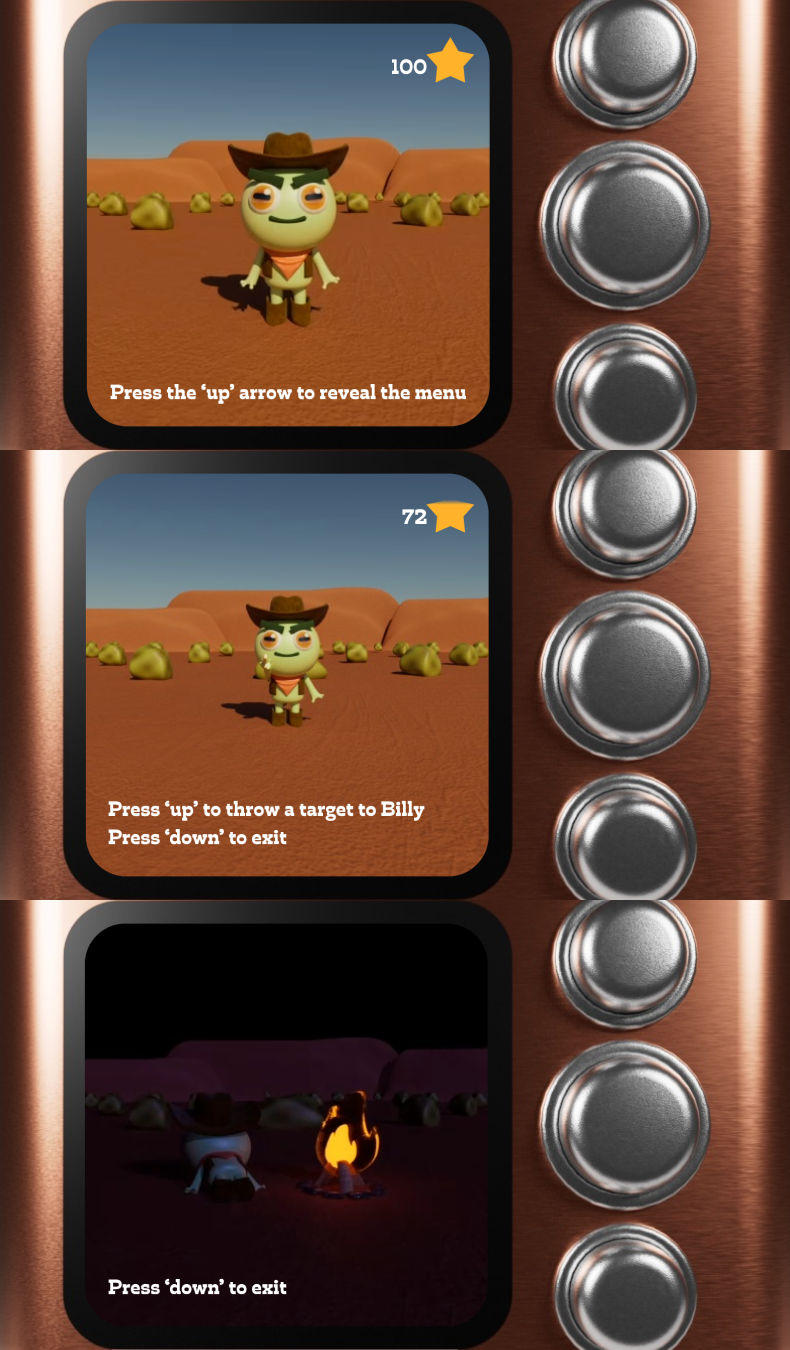
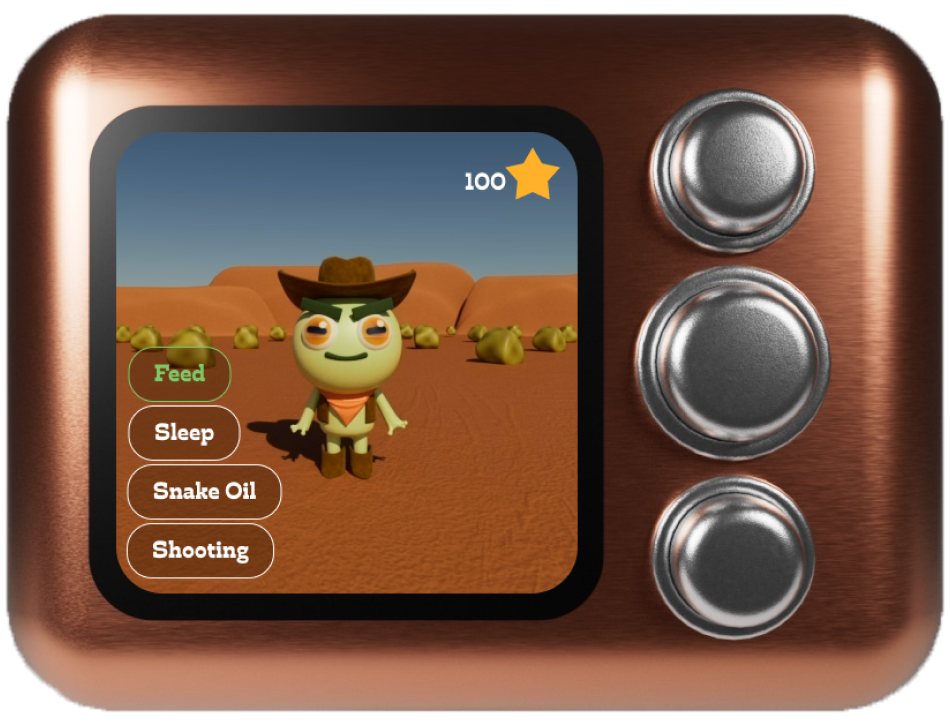
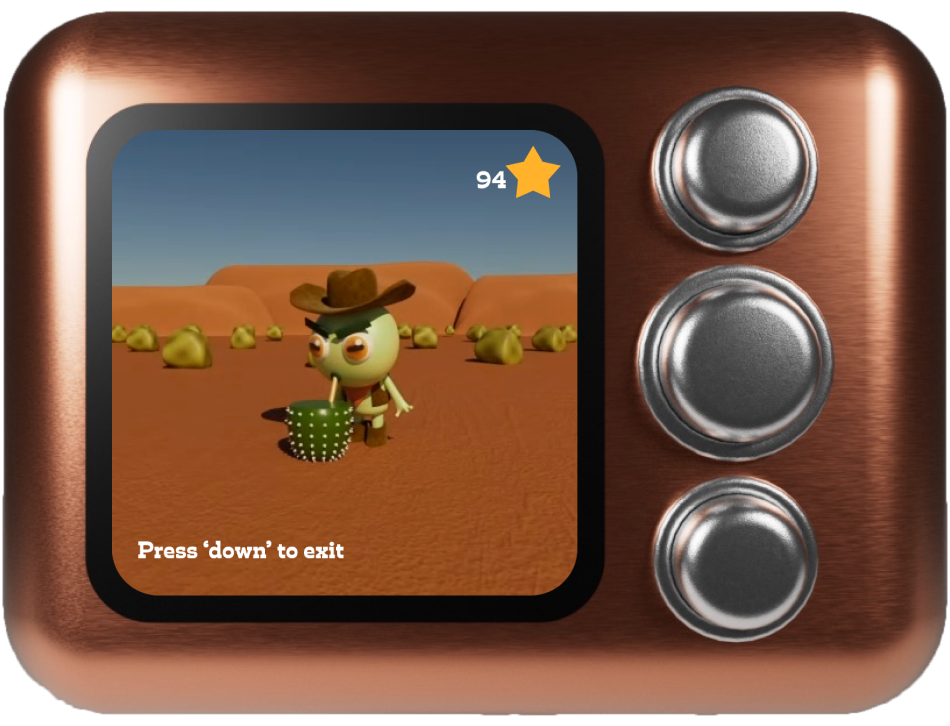
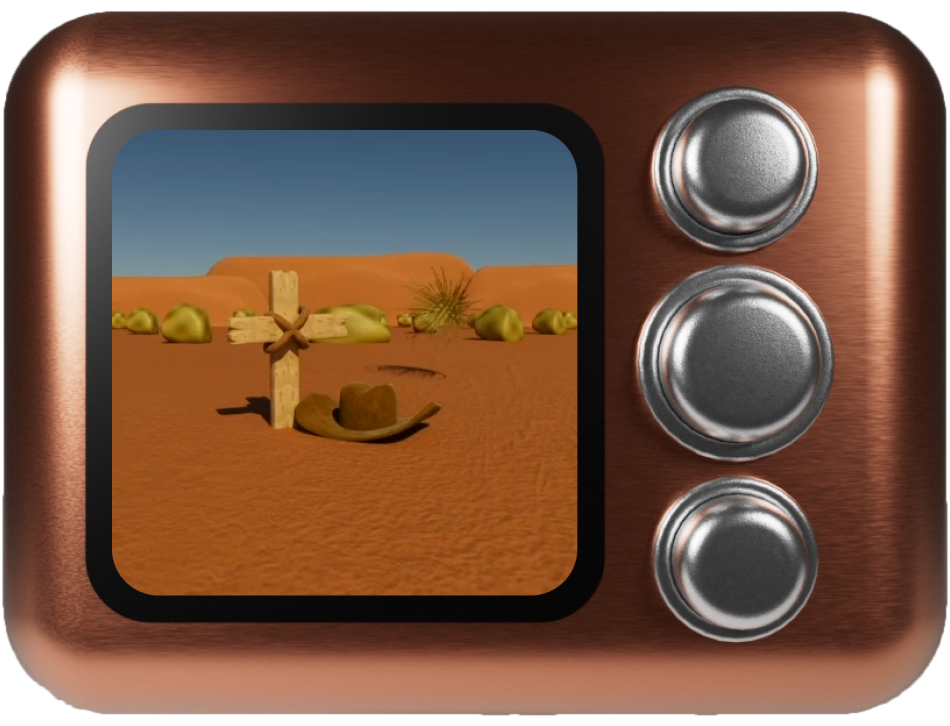
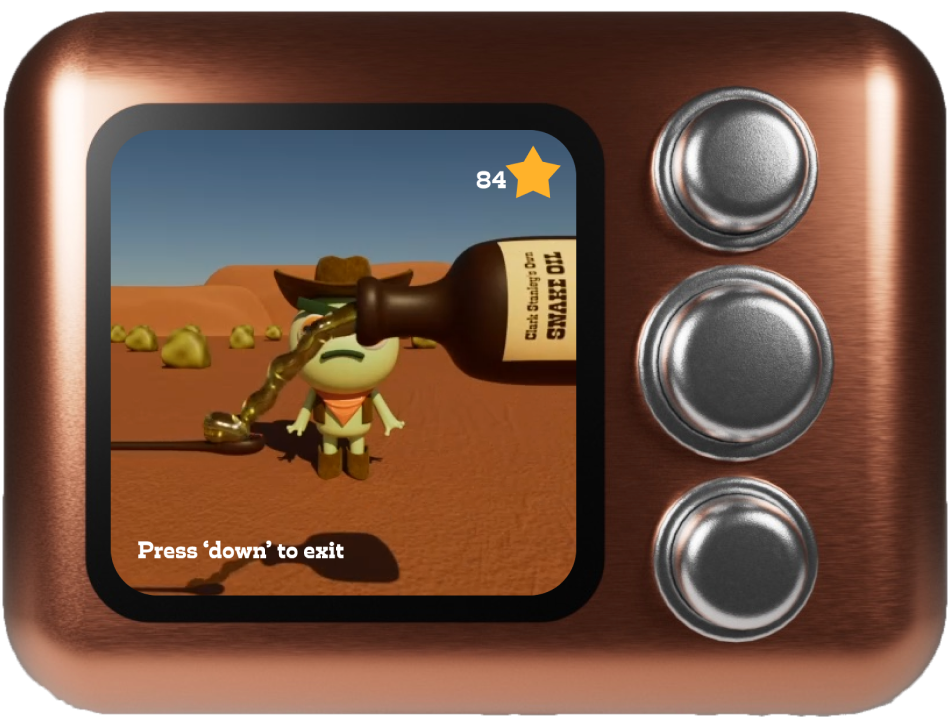
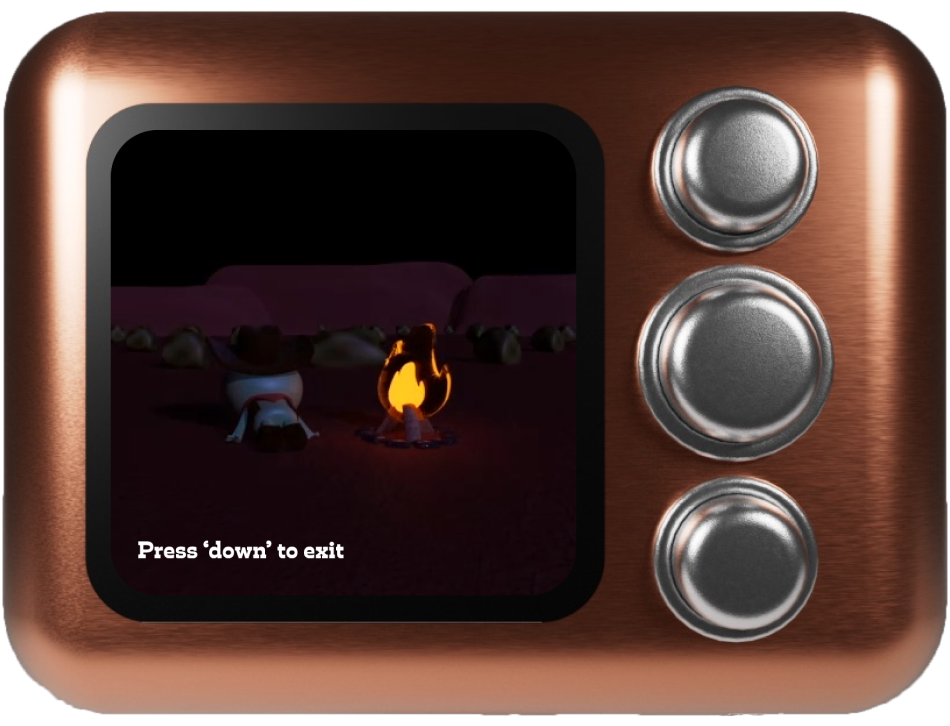
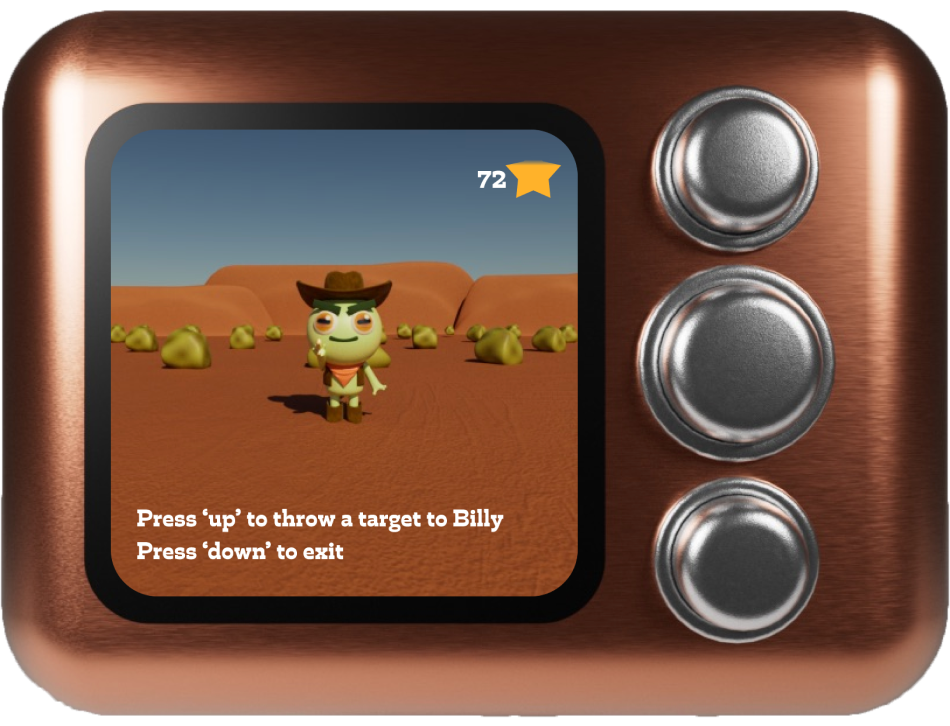
The following screens show frames of animation from the main menu, eating sequence, death sequence, medical care sequence, sleeping sequence, and shooting practice/ enrichment time sequence.
Guidance and Messaging
As shown in previously, when I often used text to guide the user on which controls to press to get interactions they could possibly want. There are most often used to aide the user in undo a previous action and exiting out of an activity page, and slowly establishing the ‘down’ button as an alternative to ‘undo’ or the ‘escape’ key. I also used white text to alert the user of the health/battery percentage so they are sure to put Billy to sleep before its too late, with the only exception to this being the sleeping activity page, since they are in the process of increasing his health/battery meter.